

Washing machines are one of the hardest-working appliances in the home. They deal with heavy loads, constant use, and everything from detergent build-up to coins left in pockets. Over time, it’s no surprise they develop faults.
Some issues are simple DIY jobs you can sort in minutes, while others require spare parts or a professional repair. This guide covers the most common washing machine problems, their causes, and what to do next.
Common Washing Machine Symptoms
Washing machine problems usually show up as symptoms you can see, hear, or smell. Recognising these early can save you time, money, and frustration:
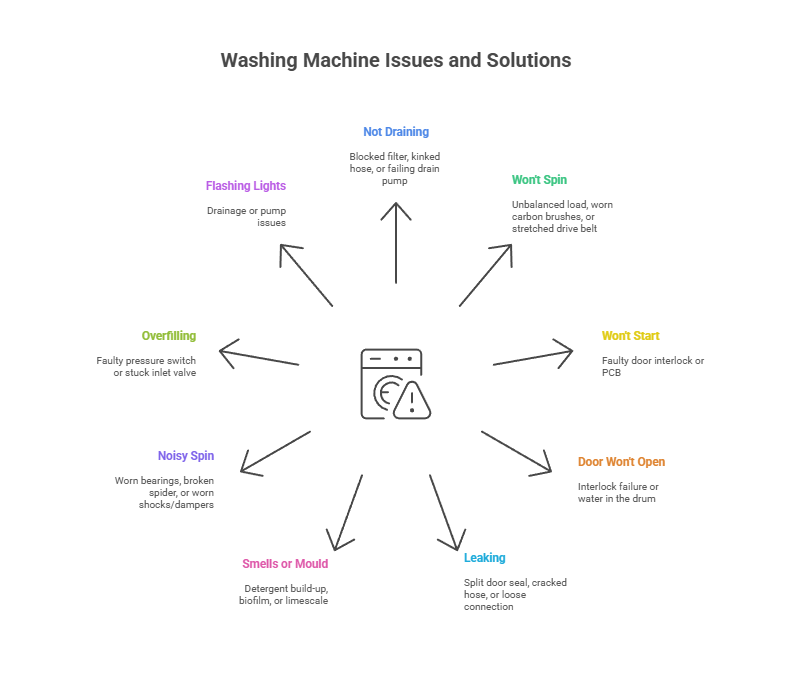
- Not draining , water is left sitting in the drum at the end of the cycle. Often linked to a blocked filter, kinked hose, or a failing drain pump.
- Won’t spin , clothes come out dripping wet because the drum never reaches full speed. Causes range from an unbalanced load to worn carbon brushes or a stretched drive belt.
- Won’t start , the lights may come on but the programme won’t begin. Faults with the door interlock or the PCB (control board) are common culprits.
- Door won’t open , a jammed or locked door is frustrating, especially with clothes trapped inside. It’s usually down to the interlock failing or water still sitting in the drum.
- Leaking , water pooling at the front, bottom, or back often points to a split door seal, cracked hose, or loose connection.
- Smells or mould , unpleasant odours are caused by detergent build-up, biofilm in the seal, or limescale if you live in a hard-water area.
- Noisy spin , banging, grinding, or knocking noises suggest worn bearings, a broken spider, or shocks/dampers past their best.
- Overfilling , too much water entering the drum is caused by a faulty pressure switch or a stuck inlet valve.
- Flashing lights or error codes , modern machines display codes like Bosch E18 or Hotpoint F05, usually linking back to drainage or pump issues.
Likely Causes Behind These Issues
Every symptom connects to a faulty part or system. Understanding the root cause helps you decide whether to fix it yourself or call in a professional:
- Blocked filter , stops the machine draining and can trigger error codes.
- Drain pump , may hum but fail to empty water, often from jammed impellers.
- Drain hose , kinks or blockages prevent water leaving the drum.
- Carbon brushes , wear down over time, leaving the motor too weak to spin.
- Drive belt , stretched, slipping, or broken, so the motor turns but the drum doesn’t.
- Motor / tachometer sensor , if faulty, the machine can’t control spin speed.
- Door interlock , if it fails, the machine won’t start or the door won’t release.
- Pressure switch , gives incorrect water level readings, causing overfilling or no spin.
- Heater element , fails due to limescale, leaving clothes washed in cold water.
- NTC sensor , a faulty temperature sensor confuses the heating cycle.
- PCB / control board , electrical faults or failed relays stop the machine from running correctly.
- Door seal gasket , splits lead to leaks at the front of the machine.
- Bearings, spider, shock absorbers , cause noise, vibration, and poor drum stability.
- Limescale build-up , common in hard-water regions, reducing heating efficiency.
- Detergent overdosing , leads to blockages, leaks from the drawer, and poor rinsing.
Component Focus , What Can Fail in a Washing Machine
Breaking the machine down into systems makes diagnosis easier:
- Drainage system , pump, filter, and hose remove wastewater. If blocked, the machine won’t drain.
- Motor system , motor, carbon brushes, and drive belt power the drum. Worn brushes or a snapped belt mean no spin.
- Heating system , heater element and NTC sensor keep wash water at the right temperature. Failure means cold washes or overheating.
- Water level system , pressure switch and tube prevent overfilling. Faults here can lead to leaks or error codes.
- Inlet system , inlet valves and hoses fill the drum. A stuck valve can flood the drawer.
- Suspension system , shocks, springs, bearings, and spider stabilise the drum. Worn parts cause noise and violent shaking.
- Door system , interlock, handle, and seal keep the door locked and watertight. Failures cause leaks or prevent the cycle starting.
- Detergent dispenser , drawer and siphon channel detergent correctly. Build-up causes leaks and blockages.
Brand-Specific Error Codes and Quirks
Most modern machines display error codes to guide repairs. Here are common ones in the UK:
- Hotpoint / Indesit , F05 indicates a drainage problem.
- Bosch , E18 means water isn’t draining.
- Zanussi / AEG , E20 points to pump or filter issues.
- Samsung , 4E (water fill) or 5E (drain problem).
- LG , OE means the washer isn’t draining.
- Miele , codes are more advanced, but most prompt you to call service.
- Whirlpool, Hoover, Candy , each brand has its own error list, but many relate to common drainage or heating faults.
Always check your manual or the manufacturer’s website for code definitions specific to your model.
DIY Fixes You Can Try Safely
Some washing machine repairs are safe for a confident DIYer: Always disconnect the machine from the mains supply.
- Clean the filter , remove coins, fluff, or hairpins blocking water flow.
- Check the drain hose , straighten kinks and flush blockages.
- Replace the door seal , a straightforward job if it’s split or mouldy.
- Fit new carbon brushes , a fix that can restore older motors.
- Swap the drive belt , easy if the drum won’t turn.
- Replace the drain pump , common repair if the machine won’t empty.
- Run descaler or cleaner , tackles limescale and odour build-up.
Tools you may need: pliers, torx drivers, hose clamps, and a multimeter for testing continuity.
Stop and call an engineer if:
- The RCD keeps tripping
- You smell burning or electrical faults
- There are major water leaks
When to Call a Professional Engineer
Not every fault is worth tackling yourself. A qualified appliance engineer is best for:
- Control board (PCB) faults
- Bearing or spider replacements
- Drum suspension repairs
- Electrical issues causing RCD trips
Typical UK repair costs:
- Drain pump: £80–£120 Depending on make and model.
- Door seal: £60–£90 Depending on make and model.
- Carbon brushes: £70–£100 Depending on make and model.
- Bearings/spider: £150+ If it can be repaired many modern machines bearings cannot be replaced.
Check if you’re still under warranty or covered by consumer rights before paying out of pocket.
Preventing Future Washing Machine Problems
Regular care reduces the risk of faults:
- Descale every 3–6 months in hard-water areas.
- Wipe the door seal after washes to prevent mould.
- Clean the detergent drawer to stop blockages.
- Measure detergent properly to avoid over-sudsing.
- Run a hot maintenance wash monthly to clear biofilm.
- Check pockets before washing to stop coins damaging the pump.
Repair or Replace? Making the Right Choice
At some point, you’ll need to weigh up repairs against replacement:
- If the machine is 7+ years old, major repairs may not be cost-effective.
- Use a repair cost guide to compare parts + labour against buying new.
- Consider energy efficiency , new models can save on bills.
- Don’t forget WEEE disposal and installation services when replacing.
Final Thoughts & How to Get Help
Most washing machine problems come down to a handful of parts , the drain pump, door seal, carbon brushes, or heater element. With the right information, many issues can be solved at home.
If you’re unsure or the fault is electrical, it’s best to call a local washing machine repair service. For those confident in DIY, ordering the correct replacement part for your model is often the quickest fix.
Either way, addressing the issue early prevents further damage and keeps your appliance running smoothly. Need professional help with your washing machine? Contact Washerfix today on 0114 4910432 for expert repair services.